
- 18 Apr 2025
- Jatin Kumar
- Interior Design
- Comments: 0
How to Build a Strong Foundation in Interior Design
Introduction
Good interior design begins with more than an appreciation for beautiful spaces. It requires observation, creativity, planning, communication, and an understanding of how people interact with their surroundings.
For someone starting out, it can be difficult to know which skills to develop first. Building a strong foundation can make the learning process easier and help beginners approach design projects with greater confidence.
From understanding spaces to experimenting with materials and developing visual ideas, there are several areas that can help shape a student’s approach to design.
Start by Observing Your Surroundings
One of the simplest ways to develop design awareness is to pay closer attention to everyday spaces.
Look at homes, cafés, offices, shops, hotels, and public spaces. Notice how furniture is arranged, how light enters the space, how colours work together, and how people move through different areas.
Instead of simply deciding whether you like a particular space, try to understand why it works.
This habit of observation can gradually help develop a stronger visual sense and encourage you to notice details that might otherwise go unnoticed.
Understand Space and Function
A visually attractive room may not necessarily be a well-designed room.
Interior designers need to consider how a space will actually be used. Furniture placement, movement, storage, proportions, accessibility, and comfort all influence the experience of a space.
Learning to balance appearance with functionality is therefore an important part of developing design thinking.
A good concept should not only look appealing but should also respond to the needs of the people using the space.
Develop an Understanding of Colour and Materials
Colour and materials can dramatically change the atmosphere of an interior.
Warm and cool tones can create different moods, while materials such as wood, stone, metal, glass, and fabric can add different textures and characteristics.
Beginners can experiment with combinations through mood boards and material samples. This allows them to understand how different elements interact before developing them into a complete design concept.
Over time, this experimentation can help develop a better understanding of colour combinations, textures, finishes, and visual balance.
Practice Sketching Your Ideas
You don’t have to be an expert artist to start developing design ideas.
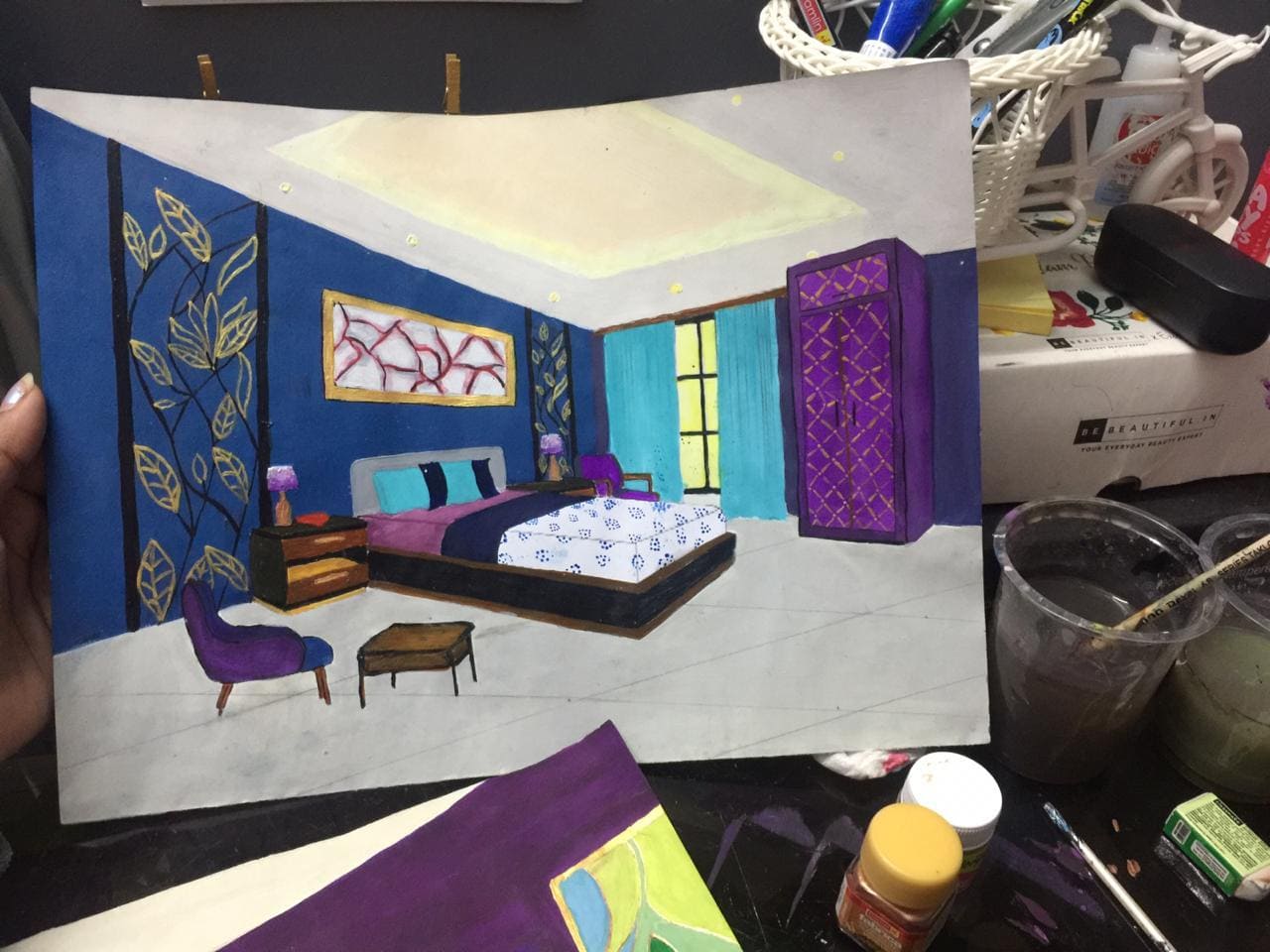
Simple sketches can help communicate layouts, furniture arrangements, proportions, and creative concepts. Regular practice can gradually improve visual communication and make it easier to express ideas.
Sketching also encourages designers to explore multiple solutions instead of becoming attached to their first idea.
The purpose is not always to create a perfect drawing. It is to learn how to communicate an idea visually.
Learn the Tools Used in Design
Technology has become an important part of modern design practice.
Digital tools can help designers create drawings, layouts, three-dimensional visualisations, presentations, and project documentation.
Learning these tools alongside fundamental design principles can help students communicate their concepts more effectively.
However, software should support creative thinking rather than replace it. Understanding the basic principles of space, proportion, materials, and functionality remains important.
Work on Small Design Projects
Practical projects provide an opportunity to apply what you learn.
A beginner could start by redesigning a bedroom, creating a concept for a small café, planning a compact workspace, or developing a mood board for a living room.
The purpose is not simply to create something attractive. Each project should involve thinking about the user, available space, materials, colours, functionality, and overall concept.
Working on smaller projects can also make it easier to experiment with different ideas and learn from mistakes.
Learn to Accept Feedback
Design is an iterative process.
A concept may look good to the person who created it but may need changes after receiving feedback from someone else. Learning to listen, analyse suggestions, and improve the work is an important part of developing as a designer.
Constructive feedback can help beginners identify weaknesses and discover possibilities they may not have considered themselves.
With regular practice, this process can make students more confident in presenting and explaining their design decisions.
Build a Collection of Your Work
Keeping your projects organised can help you see how your skills develop over time.
Save sketches, mood boards, layouts, material studies, digital visualisations, and completed projects. Even early work can be useful because it shows the progression of your thinking.
As your abilities improve, these projects can eventually contribute towards a professional portfolio.
A collection of work can also help you identify the areas of design that interest you the most.
Learn Through Practical Exposure
Classroom learning becomes more meaningful when students have opportunities to experience design beyond theory.
Workshops, exhibitions, site visits, practical assignments, guest sessions, and project-based activities can introduce learners to different aspects of the field.
At GIFT Design Academy, students can explore design through structured learning, practical activities, workshops, and industry exposure.
These experiences can help students understand how creative ideas are developed and applied in practical situations.
Keep Exploring and Experimenting
There is no single formula for becoming a good designer.
Different designers develop different approaches based on their interests, experiences, observations, and experimentation.
Reading about design, visiting interesting spaces, studying different styles, collecting references, experimenting with materials, and observing current trends can all contribute to continuous learning.
The more you explore, the easier it becomes to develop your own perspective and understand what kind of designer you want to become.
Conclusion
Building a strong foundation in interior design is a gradual process. Creativity provides the starting point, but observation, practical knowledge, experimentation, communication, and consistent practice help develop that creativity into useful skills.
For beginners, the most important step is to stay curious and keep creating. Every sketch, project, observation, and experiment can contribute to a better understanding of design.
GIFT Design Academy provides students with opportunities to explore these areas through Professional Interior Design Education, practical activities, workshops, and industry exposure, helping them take their first steps towards developing their abilities and professional confidence.